
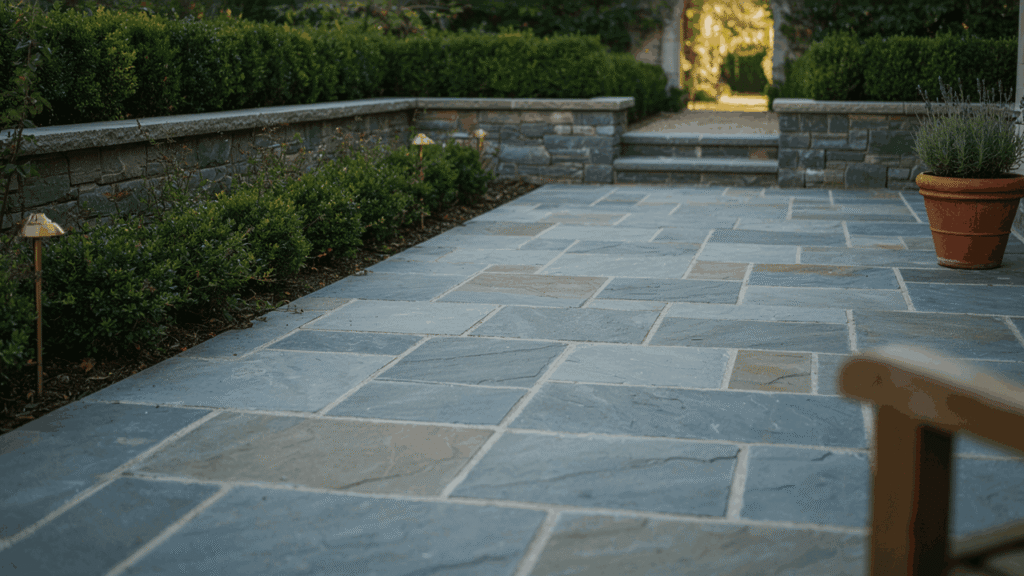
Why does a beautiful patio shift after winter? Usually, the stone is not the real problem. Water moves through susceptible soil toward the freezing zone, where ice lenses can form and grow. That upward movement can lift the soil and the patio above it. Spring thawing then leaves unsupported areas beneath the stone. Repeated cycles can create uneven surfaces, loose joints, and cracked edges. Fairfield County homeowners face these problems every winter. A properly built base helps control that movement.
Understanding Fairfield County’s Freeze-Thaw Problem
Fairfield County sees repeated freezing and thawing conditions. Those cycles put stress beneath outdoor hardscaping. Water can enter soil beneath a patio. Freezing then expands moisture inside that soil. Thawing releases that pressure and weakens the ground. Poor drainage makes this cycle even worse. Connecticut transportation research also recognizes frost-susceptible soils. Glacial till and silt can experience frost-related movement. A patio needs drainage and stable aggregate underneath.
What is Frost Heave?
Frost heave happens when freezing soil moves upward. It needs three things to develop properly. Those include freezing temperatures, moisture, and susceptible soil. Water migrates toward freezing areas within the ground. Ice lenses can then form beneath surfaces. As those lenses grow, they push soil upward. Your patio follows that movement above it. During spring, the ice eventually melts away. The ground can then settle unevenly beneath stones. That creates the familiar rocking patio problem.
Why Shallow Patio Bases Are Vulnerable to Freeze-Thaw
A shallow base leaves more native soil underneath. That soil may hold substantial moisture during winter. Fine soils create greater concerns during freeze-thaw cycles. A thin layer cannot always provide enough separation. It also cannot correct poor underlying drainage. When frost lifts the soil, stones can move. The same problem can affect paver installations. A good patio base that Connecticut homeowners trust needs proper depth. It also needs clean, compactable aggregate and drainage.
Why Bluestone Needs a Stable Foundation
Bluestone looks strong because it feels extremely solid. Yet even a strong stone depends on its foundation. Individual slabs cannot stop unstable soil movement. Unsupported areas can eventually crack under repeated loading. Thin or uneven bedding can create additional stress. A stable bluestone patio base spreads loads better. It also helps maintain consistent elevations across the patio. Proper installation starts below the visible stone surface. That hidden work determines much of the patio’s lifespan.
Building a Deep, Stable Aggregate Base
A deep aggregate base replaces vulnerable soil where needed. Crews first remove unsuitable material to planned depths. They then install suitable crushed aggregate in layers. Each layer receives thorough mechanical compaction. Proper compaction reduces future settlement beneath the patio. Clean drainage paths also help move water away. The exact depth should match site conditions. Soil type, drainage, slope, and loading all matter. There is no universal patio depth for every property.
Connecticut research supports replacing frost-susceptible materials where appropriate. It also stresses keeping replacement materials properly drained. That principle matters for Fairfield County patios.
How a Proper Freeze-Thaw-Resistant Patio Is Built
Good patio construction starts with the ground. The crew evaluates slope, soil, drainage, and existing grades. Unsuitable material gets removed before construction continues. Aggregate then goes down in controlled, compacted layers. The installer checks elevations throughout the process. Proper edge restraint helps keep stones from spreading. Joints also need suitable material for the installation. Bluestone pieces should receive consistent support underneath. Surface drainage should direct water away from structures.
This approach takes longer than a quick overlay. However, it addresses problems beneath the surface. We handle patios, walkways, work on retaining walls and stonework. Our broader masonry and landscaping experience supports coordinated outdoor projects.
Westport, Norwalk, and Fairfield: What Homeowners Should Watch For
A patio does not experience the same conditions everywhere. Westport properties can have slopes and coastal exposure. Norwalk properties may have older developed landscapes. Fairfield homes can also have varied drainage conditions. Existing grades often determine where water collects. Downspouts can create concentrated moisture near patios. Poorly directed runoff can saturate the underlying soil. A local site assessment should identify these problems first.
Planning a bluestone patio that Westport homeowners can enjoy requires attention. The same applies to a bluestone patio Norwalk project. A bluestone patio project in Fairfield property needs similar site planning. S&S Masonry and Landscaping LLC serves Fairfield County homeowners. Our services include patios, walkways, and landscape improvements.
Warning Signs Your Existing Patio Has a Freeze-Thaw Problem
Look closely after winter before repairing anything. Rocking stones can indicate movement underneath. Raised sections may point toward frost heave. Sunken areas can show soil settlement below. Open joints may indicate shifting stones. Cracked edges can also signal base movement. Water pooling deserves attention as well. Pooling water can keep underlying soil saturated. Spring is often the best time for inspection. Document changes before making temporary repairs.
Deep Base vs. Quick Fix: What Homeowners Are Really Paying For
Why does rebuilding cost more than resetting stones? The answer sits underneath the patio. A quick fix may reset visibly displaced stones. It does not necessarily correct unstable soil below. The same movement can return next winter. A deeper rebuild addresses the underlying foundation. Crews remove problem material and rebuild supporting layers. They can also correct drainage during reconstruction. That creates more work and higher upfront costs. However, the repair addresses more than appearance.
S&S Masonry and Landscaping LLC handles masonry repairs too. Our services include masonry restoration and outdoor construction. A proper assessment helps determine the needed approach.
Fairfield County Bluestone Patio Winter Checklist
Before winter, inspect every patio section carefully. Look for rocking or uneven bluestone pieces. Check joints for widening or missing material. Watch for standing water after heavy rain. Inspect nearby downspouts and drainage paths. Keep leaves from blocking surface drainage. Avoid pushing snow against delicate patio edges. Do not ignore small elevation changes. They can become larger after repeated freezing. Schedule repairs before another winter cycle begins.
Conclusion
A durable patio starts beneath the bluestone. Fairfield County winters test every weak foundation. Frost heave becomes harder to manage after construction. Proper excavation, aggregate, compaction, and drainage matter. S&S Masonry and Landscaping LLC builds outdoor spaces thoughtfully. Our company provides patios, walkways, masonry, and landscaping services. If your patio keeps shifting each winter, ask for an evaluation before another repair. A proper assessment can reveal what lies underneath.
Frequently Asked Questions
Can bluestone patios withstand Fairfield County winters?
Yes, bluestone can perform well through winter. The foundation underneath matters just as much. Proper drainage also reduces moisture-related movement. Installation methods should match the property’s conditions.
How deep should a bluestone patio base be?
There is no single depth for every property. Soil conditions can change the required excavation. Drainage and expected loading also affect construction. A contractor should evaluate the actual site first.
Does Connecticut require patios to reach forty-two inches?
Not automatically. Connecticut’s forty-two-inch requirement concerns covered foundations. It does not establish one universal patio depth. Patio construction requires site-specific design and installation decisions.
What causes frost heave beneath patios?
Frost heave needs freezing, moisture, and susceptible soil. Water moves through soil toward freezing zones. Ice formation then pushes surrounding soil upward. The patio above can move with it.
Can I repair frost heave without rebuilding?
Sometimes, depending on the damage involved. Minor movement may allow localized stone resetting. Repeated movement usually requires deeper investigation. The underlying drainage and base need checking. Otherwise, the same problem may return.
When should I rebuild my bluestone patio?
Consider rebuilding when movement keeps returning. Persistent settlement often points to issues below the surface. Repeated repairs can become expensive over time. A proper inspection can identify the actual cause. S&S Masonry and Landscaping LLC provides patio services.